

Women and Coral Craftsmanship in Torre del Greco
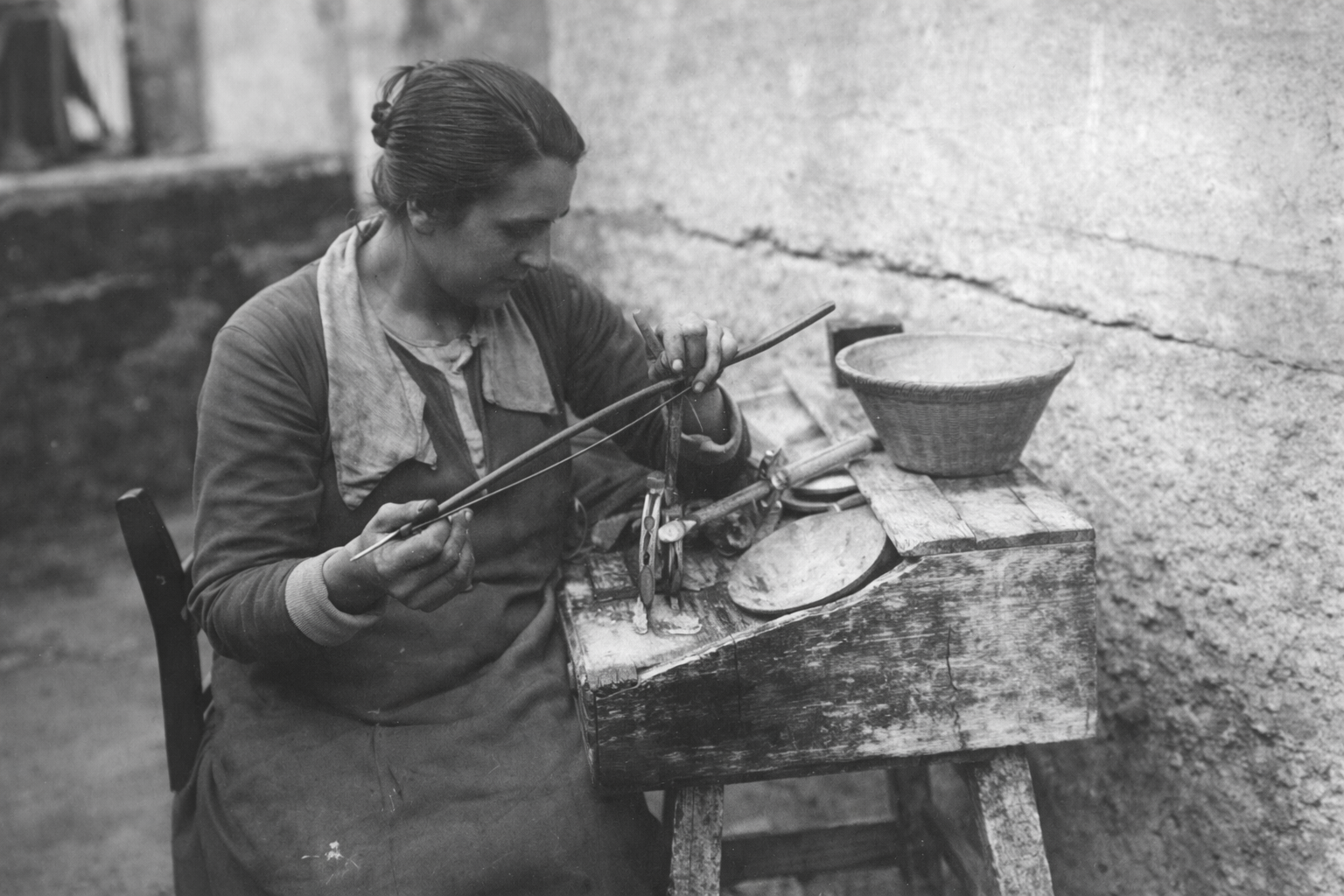 The figure of the woman has always been central to the history of coral in Torre del Greco—not as a footnote, but as the backbone of an entire maritime and manufacturing economy.
To understand why, we must look back. Torre del Greco—a city between the volcano and the sea—built its identity around coral even before a true local industry existed. Historical sources tell us that for centuries, fleets of coral boats would set sail from its harbor toward every corner of the Mediterranean: long expeditions, often dangerous and rarely profitable in the short term, marked by hard labor that involved countless families.
In this early period, the coral fished at sea was not always processed locally; it was often sold to other Italian centers with established manufacturing traditions, such as Genoa and Livorno.
And this is where the role of women begins—before the workshop itself. While the men were away at sea for months, the continuity of daily life relied on those who stayed on land: managing the home, caring for children, sustaining the family community. It’s a dynamic that becomes clearer if we consider the long duration and all-encompassing nature of the fishing campaigns.
The Turning Point of the 19th Century: From Fishing to Manufacturing
The second major phase in coral craftsmanship in Torre del Greco began between 1805 and 1806, with the arrival of Paolo Bartolomeo Martin and the granting of an exclusive license by Ferdinand IV in 1805. This political and economic decision aimed not only to promote production but also to train apprentices and consolidate technical expertise locally.
Later, in 1807, the training initiative was extended to Naples, at the Real Albergo dei Poveri institution, where instruction was offered specifically to young men and women alike. This detail reveals that female participation was already a structural element of the industry—not a recent or marginal phenomenon.
Women’s Work: Skill, Precision, and Responsibility
Once coral processing entered homes and workshops, women were no longer simply “helpers”: they were specialists. Academic sources on the Torre del Greco industry and its linguistic legacy note that, in the 19th century, the piercing and stringing stages were entrusted exclusively to female workers. More broadly, women were considered indispensable to the coral proto-industry, performing tasks such as cutting, polishing, and stringing.
These weren’t abstract gestures, but precise, technically demanding steps: cutting; full or partial drilling with a bow drill; shaping on a grinding wheel; polishing in pouches or barrels with pumice and other abrasives; grading by size and color; and the final stringing. In other words, a chain of precision, patience, and skill—often in women’s hands.
This history also intertwines with the life of the community. In local memory, the figure of Saint Vincenzo Romano often reappears—the parish priest and moral guide during difficult years. Official sources recall his dedication to the daily needs of workers and fishermen in a territory marked by hardship and disaster.
Protecting the Resource: Tradition and Sustainability
Over the years, coral fishing and harvesting have undergone major transformations. Today, the collection of red coral in Italy is regulated by the National Management Plan, which defines the required permits, approved methods (such as the use of a pickaxe in professional underwater harvesting), and sets an annual collection period from May 1 to October 31.
For industry professionals, these regulations are not mere bureaucratic formalities but essential elements in enhancing the value of the product. Tradition and environmental preservation now stand as two complementary pillars of a company’s reputation.
Stories of Women in the Aucella Artisan Workshop
In our own company’s history, women’s roles have always been decisive. In the workshop, it was common to see women engaged in the final stages: selecting pre-drilled semi-finished pieces, stringing, checking color consistency and necklace “flow,” and preparing the finished item for sale.
And beside the workbench, another key place: administration. In family-run businesses—ours included—it was often the women who ensured continuity: maintaining order, managing accounts, holding responsibility, and guiding everyday operations.
Aurora Vernassi: A New Apprentice in a Long Tradition
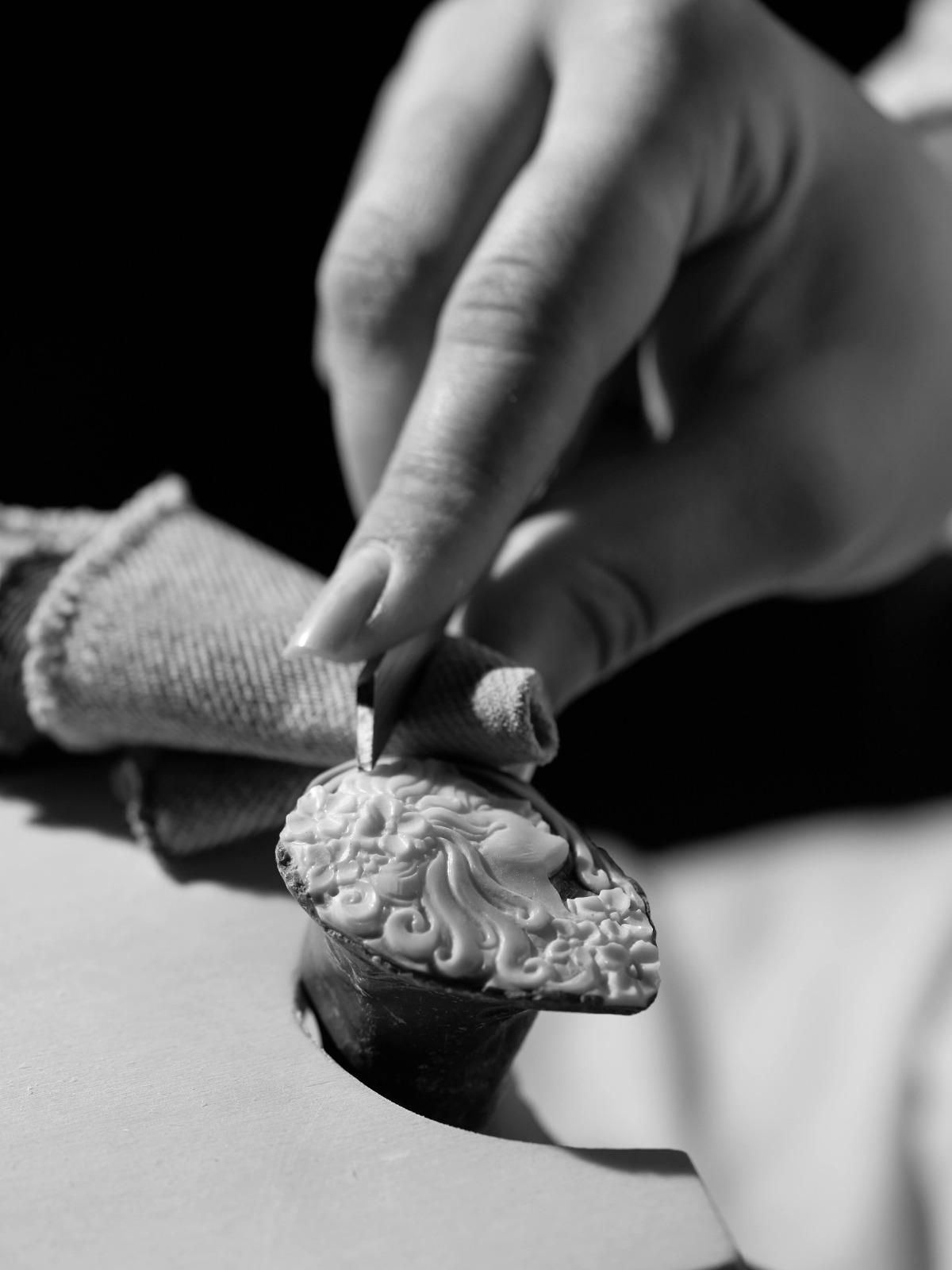 Within this tradition, the story of Aurora Vernassi represents a tangible sign of continuity and future.
Aurora has already shared her story on an international stage: on January 18, 2026, during a talk at Vicenzaoro, she spoke about her experience and her expectations for the future as the winner of the latest edition of the program “Una Scuola, un Lavoro. Percorsi di Eccellenza” (“A School, a Job. Paths of Excellence”).
That talk highlighted a virtuous model based on collaboration between Fondazione Cologni, Istituto Degni, and Assocoral: a triangle connecting education, industry, and representation—creating real opportunities for young artisans.
Today, as Aurora joins the workshop, she brings with her something as valuable as manual skill: new time, new questions, new energy. And that is exactly what artistic craftsmanship needs to stay alive—not to change its essence, but to keep growing within its own identity.





Fill out the form for info and quotes on the products and services available